
Old Electrical Panel Replacement Cost
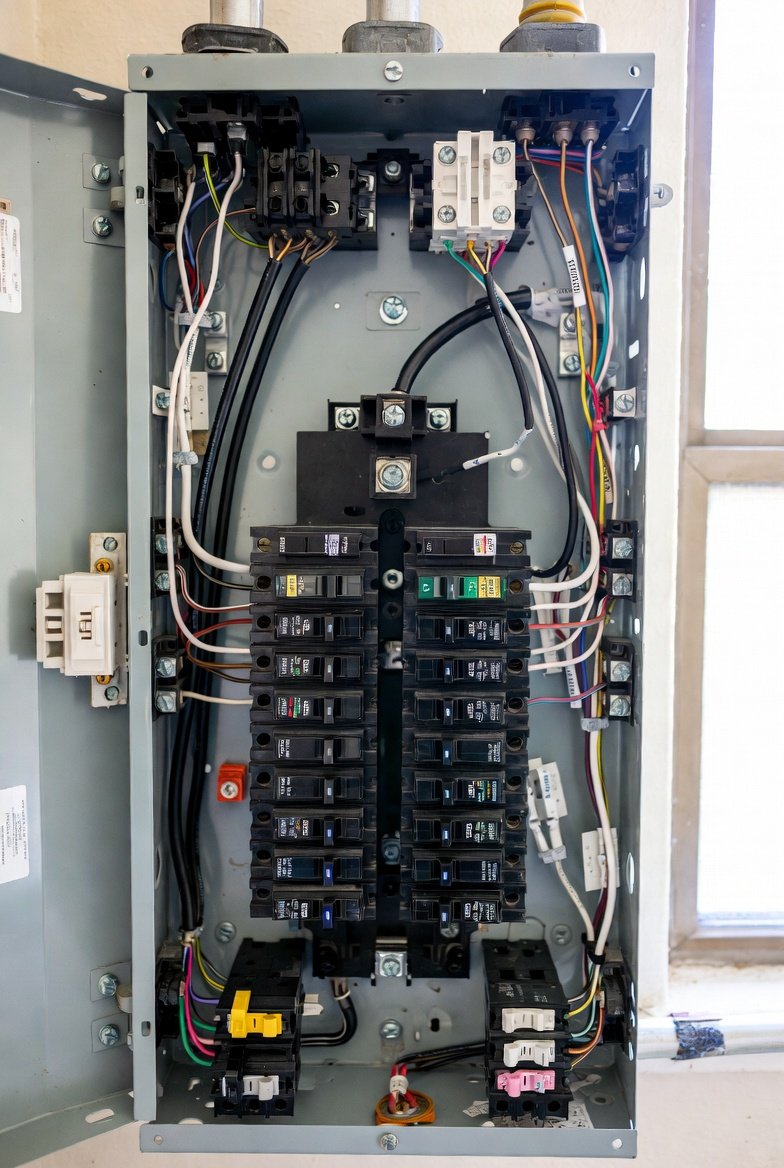
Older homes may require additional corrections:
- Aluminum branch wiring connections
- Limited breaker space
- Outdated enclosures
- Missing grounding rods
- Aging service conductors
In these cases, costs commonly reach:
$2,500 – $4,500
If capacity is also insufficient, the project may combine replacement and upgrade.
Breaker Box Replacement Cost
“Breaker box replacement” typically refers to the same scope.
Average cost:
$1,500 – $3,500
Lower-end scenarios apply when:
- Same location
- Same amperage
- Wiring in good condition
- No relocation required
Electrical Panel Replacement Quote Red Flags
Homeowners often fear overpaying — but underpriced quotes can be more dangerous.
Watch for:
- Quotes under $1,200 for full replacement
- No permit or inspection line item
- “Same-day, no inspection required” claims
- No mention of grounding or bonding updates
- Vague labor descriptions
A proper panel replacement includes inspection and compliance work — not just swapping hardware.
Insurance & Underwriting Considerations
Insurance companies increasingly scrutinize panel age and condition.
Panels older than 30–40 years or from discontinued manufacturers are more likely to be flagged during underwriting reviews.
Replacement may be required if:
- The panel fails inspection
- There’s overheating history
- The brand has known safety concerns
We explain insurance triggers here: upgrade insurance requirements
Replacement can stabilize insurability and reduce policy complications.
Regional & Code Variation Context
While NEC standards are national, adoption timing varies by state and municipality.
Additionally:
- Utility coordination rules differ
- Permit fees vary widely
- Inspection procedures differ regionally
This variation affects both pricing and scheduling complexity.
Panel Relocation Cost
If relocation is required due to:
- Clearance violations
- Renovation
- Flood damage
- Accessibility issues
Expect an additional:
$500 – $2,000+
Relocation increases labor hours and often requires drywall repair.
Real-World Example Scenario
A 1985 home replacing a 100-amp panel without increasing capacity:
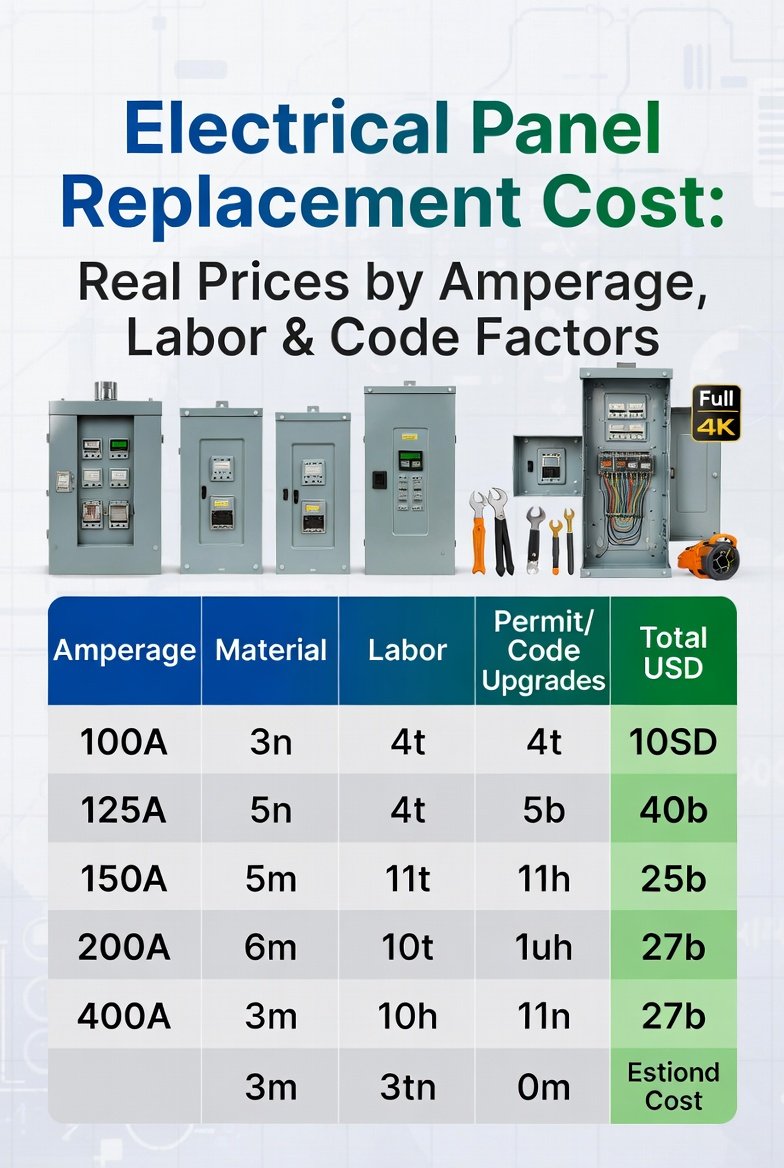
- New 100A panel: $450
- Labor: $1,100
- Permit & inspection: $200
- Minor grounding update: $300
Total: ~$2,050
This type of straightforward replacement falls in the mid-range of national averages.
Cost of Waiting
Delaying replacement after repeated breaker failures can lead to:
- Emergency repair pricing
- Failed inspections during resale
- Insurance underwriting flags
- Increased fire risk
Small problems inside aging panels rarely improve over time.
If you’re seeing warning signs, review: panel upgrade
Replacement vs Upgrade — Quick Decision Guide
Situation | Correct Action |
Panel is failing or damaged | Replacement |
Capacity too small | Upgrade |
Both safety + capacity issues | Combined project |
If the panel enclosure is compromised, replacement is non-negotiable.
How Long Does Panel Replacement Take?
Standard projects take:
4–8 hours
Complex scenarios (service upgrade, relocation, wiring corrections) may require a full day.
Inspection details are explained here: panel upgrade inspection
Power will be shut off during installation.
Final Cost Summary
Most homeowners pay:
$1,500 to $4,500+
Final pricing depends on:
- Amperage
- Wiring condition
- Code corrections
- Panel location
- Utility coordination
- Inspection fees
When a panel is failing, replacement is not an upgrade — it’s a safety correction. Understanding the true cost allows homeowners to plan properly rather than react under pressure.
FAQ Section
How much does it cost to replace a main electrical panel?
Replacing a main panel typically costs between $2,000 and $4,000 depending on amperage, labor complexity, grounding updates, and permit requirements. If a service upgrade is included, costs may exceed that range.
Is breaker box replacement the same as panel replacement?
Yes. In residential settings, breaker box replacement and electrical panel replacement generally refer to the same scope of work — replacing the central load center and associated breakers.
Does insurance require electrical panel replacement?
Insurance companies may require replacement if the panel exceeds age thresholds (often 30–40 years), shows overheating, or is from an obsolete manufacturer. Replacement can improve underwriting approval.
Can I replace my own electrical panel?
In most jurisdictions, licensed electricians are required due to permit regulations, inspection requirements, and the inherent safety risks of working inside a live service enclosure.