Electrical panel issues rarely appear overnight. In most homes, warning signs develop gradually—small disruptions, capacity limits, or inspection concerns that signal growing strain on the electrical system. These indicators don’t automatically mean an upgrade is required, but they do point to risk, safety exposure, or compliance limitations that deserve attention.
This article is diagnostic only. It outlines the most common signs that may indicate an electrical panel upgrade is becoming necessary and explains why those signs matter. It does not recommend specific upgrades or make final decisions.
Frequent Circuit Breaker Trips
Circuit breakers are designed to trip occasionally, but repeated tripping under normal use is a common warning sign.
This usually indicates:
Circuits operating near capacity
Increased electrical demand from newer appliances
Limited panel capacity relative to current usage
When breaker trips become routine rather than occasional, it often reflects capacity strain rather than isolated faults.
Lights Flicker or Dim When Appliances Turn On
Lights that dim or flicker when appliances start can signal load imbalance.
This pattern may appear when:
Multiple high-draw devices share circuits
Voltage drops occur under load
The panel struggles to distribute power evenly
While flickering lights can have multiple causes, consistent patterns are frequently tied to panel limitations.
Burning Smells, Heat, or Discoloration Near the Panel
Any sign of heat or odor around an electrical panel is a serious warning.
These symptoms may point to:
Loose or overheating connections
Internal arcing
Degraded breakers or bus bars
Unlike capacity issues, heat or burning smells indicate potential safety risk and should be evaluated promptly.
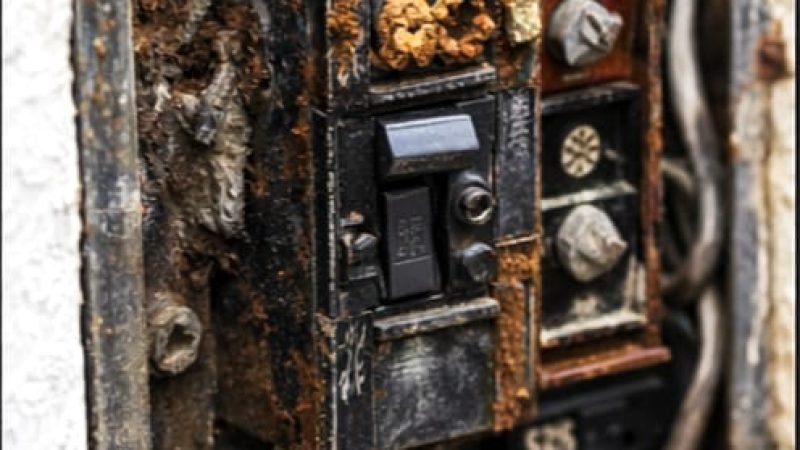
Visible Rust, Corrosion, or Moisture Damage
Physical deterioration of the panel enclosure or internal components is another diagnostic indicator.
Signs include:
Rust on the panel housing
Corrosion on breakers or terminals
Evidence of moisture intrusion
Environmental damage can weaken electrical connections over time and is often cited in inspection reports.
No Space for Additional Circuits
A full panel limits future electrical changes.
This typically appears when:
All breaker slots are occupied
Tandem breakers are already in use
New appliances require dedicated circuits
Lack of available space doesn’t confirm an immediate upgrade need, but it does signal restricted flexibility.
Heavy Reliance on Extension Cords or Power Strips
Frequent use of extension cords or power strips can reflect insufficient circuit availability.
This behavior often accompanies:
Overloaded existing circuits
Too few outlets for modern usage
Workarounds for limited panel capacity
On its own, this isn’t definitive—but combined with other signs, it adds context.
Electrical Panel Feels Warm During Normal Use
Panels should remain cool under standard operation.
Warmth can indicate:
Overloaded breakers
Loose internal connections
Sustained operation near thermal limits
Persistent warmth should be evaluated, particularly if paired with tripping or flickering.
Major Renovations or New High-Demand Equipment
Electrical demand often increases during upgrades such as:
HVAC replacements
Electric vehicle charger installations
Kitchen or laundry renovations
Solar or backup power integration
These changes can expose capacity limits that weren’t previously noticeable.
Home Inspection Flags or Conditional Notes
Electrical panels are frequently cited in home inspections.
Inspectors may note:
Outdated equipment
Safety concerns
Capacity limitations
Inspection notes often lead homeowners to research the electrical panel upgrade cost before resale or insurance approval becomes an issue.
Insurance or Utility Provider Concerns
Some insurers and utilities apply stricter standards than local building codes.
Concerns may arise when:
Legacy panels are present
Capacity no longer aligns with usage
Documentation is incomplete
These concerns often surface during underwriting or service changes.
Buzzing, Crackling, or Unusual Sounds
Electrical panels should operate quietly.
Unusual sounds may indicate:
Loose breakers
Internal arcing
Faulty connections
Audible warnings are uncommon and should be investigated when present.
Panel Age Relative to Modern Electrical Demand
Older panels were designed for lower usage levels.
Homes that now include:
Home offices
Multiple high-draw appliances
Modern entertainment systems
may exceed the original design capacity, even if the panel appears functional.
Severity-Based Diagnostic Overview
Sign Type Risk Level
Occasional breaker trips Monitor
Flickering lights Monitor
Full panel / no breaker space Escalating
Inspection or insurance flags Escalating
Heat, odor, buzzing Urgent
Corrosion or moisture Urgent
These categories reflect risk priority, not conclusions.
When to Monitor vs. Inspect Promptly
Situation Action
Single, isolated sign Monitor
Multiple capacity signs Schedule evaluation
Heat, odor, or noise Prompt inspection
Inspection or insurance issues Timely review
This framework helps distinguish observation from safety response.
Why Early Identification Matters
Recognizing warning signs early allows homeowners to:
Address safety issues before damage occurs
Avoid delays during inspections or sales
Plan electrical work proactively rather than reactively
Identifying these warning signs early also helps homeowners plan ahead by understanding the electrical panel upgrade cost before inspections, insurance reviews, or renovations force a decision.
FAQs
Do these signs always mean I need an electrical panel upgrade?
No. These are diagnostic indicators that suggest evaluation may be appropriate.
Is one warning sign enough to be concerned?
A single sign may have multiple causes. Concern increases when several appear together.
Are older panels always unsafe?
Not necessarily. Risk depends on condition, load, and maintenance rather than age alone.
Which signs should be checked immediately?
Heat, odor, buzzing, or visible damage should be evaluated promptly.