
Is It Worth Upgrading Your Electrical Panel? A Decision Matrix for Homeowners
Most people don’t ask “Is it worth upgrading my electrical panel?” because they’re bored.
They ask because something is pushing them:
- A contractor says, “You need 200 amps.”
- An EV charger quote comes back with extra work.
- A home inspector flags the panel.
- An insurance company requests electrical photos.
- Breakers won’t stop tripping and you want it fixed—fast.
Here’s the truth: a panel upgrade is absolutely worth it in some homes, and a waste in others. The difference is not the number on a quote. It’s whether your home has a capacity constraint, a safety/condition problem, or both.
This page gives you a decision-grade answer with a simple outcome matrix, honest pros/cons, and old-home nuance—without pushing you into a bigger project than you need.
If you want the detailed price breakdown first, start here:
What “Upgrading the Panel” Really Means
An electrical panel upgrade usually means increasing your home’s service/panel capacity (commonly 100 amps → 200 amps) and modernizing the distribution equipment so you can safely power today’s loads.
A panel upgrade typically involves:
- A new panel and main breaker
- New breakers (often more AFCI/GFCI than older homes had)
- Updated grounding/bonding as required
- Permits + inspections
- Sometimes utility coordination (disconnect/reconnect, service conductors, meter-side work)
It’s not just “a bigger box.” It’s a capacity and compliance project.
Permits and inspection layers matter:
The Fast Answer
A panel upgrade is usually worth it if:
- You’re adding big new loads (EV charger, heat pump, major renovation, workshop tools) and capacity is tight
- You’re out of breaker space or forced into workaround behavior
- Inspection/insurance pressure is real (flagged panel, documentation requests, sale friction)
- You want to electrify the home and avoid paying twice later
A panel upgrade is often NOT worth it if:
- Your panel is safe, modern, has space, and you’re not adding major loads
- Your “problem” is actually a single circuit issue, appliance fault, or wiring defect
- You can solve your need with targeted circuit upgrades instead of a capacity jump
Now let’s make that decision concrete.
Outcome Matrix: Is It Worth It in Your House?
Use this table like a decision tool, not a vibe check.
Your reality | What it usually means | Worth it? | What to do next |
Panel is modern, safe, has breaker space, and you’re not adding major loads | No capacity constraint | Usually no | Confirm with load check before spending |
You’re adding EV charging / heat pump / addition / big appliances | Future load demand rises | Often yes | Run load calculation + plan permits |
You’re out of breaker space or “everything is maxed” | Distribution constraint | Often yes | Confirm space vs subpanel vs upgrade |
Breakers trip often, but the panel isn’t full | Could be circuit fault | Maybe | Diagnose root cause before upgrading |
Home inspection flags the panel | Compliance pressure | Often yes | Identify the fail item and fix correctly |
Insurance requests photos or electrical updates | Underwriting pressure | Often yes | Confirm what’s being flagged and why |
Old home with unknown wiring history | Condition risk | Case-by-case | Verify wiring type + grounding + condition |
Electrical Panel Upgrade Pros and Cons
Pros
1) You unlock modern electrical loads without constant limitations
If you’re planning EV charging, heat pumps, upgraded HVAC, induction cooking, a workshop, or a major renovation, higher capacity can remove the “we can’t do that” ceiling.
2) You reduce future “do it twice” risk
A panel upgrade done at the right time prevents you from upgrading later when walls are finished, schedules are tight, or you’re mid-renovation.
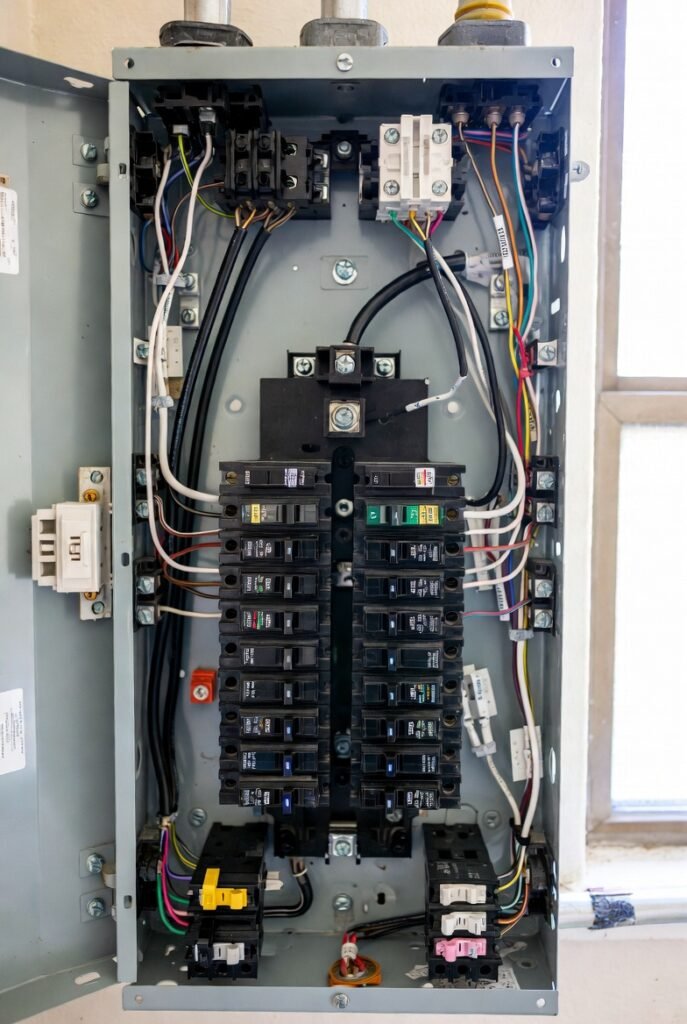
3) You improve safety and reliability when the existing equipment is outdated or stressed
If your existing panel has wear, heat history, corrosion, or poor breaker fit, modern equipment improves stability. (If the panel is unsafe, you may be in replacement territory.)
Use this decision split:
4) You reduce inspection friction and sometimes insurance friction
When a panel is flagged during a sale or documentation request, upgrading can reduce delays—when the panel is the actual problem.
5) You gain expansion headroom
More breaker spaces and better organization can make future work cleaner and cheaper.
Cons
1) Cost is real, and the “worth it” depends on what it enables
A panel upgrade is not automatically valuable if you’ll never use the capacity.
2) It doesn’t fix circuit-level problems by itself
If your issue is a loose connection, a bad appliance, a failing breaker, an overloaded circuit, or a wiring fault, a bigger panel won’t magically solve it. You can still trip breakers with a 200A service if the fault is downstream.
3) Permits, inspections, and utility coordination add complexity
Many homeowners underestimate the time and coordination. That’s normal. Just don’t pretend it’s always a quick swap.
Permit layer:
4) Upgrades can uncover required corrections
During upgrades, electricians often correct grounding/bonding, labeling, or breaker requirements to pass inspection. That’s not “upsell,” it’s compliance.
The Most Common “Worth It” Triggers (Real-World Patterns)
Capacity triggers (upgrade value is high):
- EV charger planned or installed
- Heat pump / HVAC electrification planned
- Major kitchen remodel with electric loads
- Frequent “panel is full” limitations
- You’re adding circuits and there’s no safe space
Condition triggers (upgrade/replacement becomes required):
- Panel flagged by inspection
- Heat marks, corrosion, water staining
- Breakers that don’t seat tightly / inconsistent tripping
- Known unsafe or obsolete equipment in the home’s history
If you’re unsure whether you have a capacity issue or a condition issue, this is the clean split:
upgrade vs replacement
Is It Worth It for Old Homes?
Old homes don’t “need upgrades” just because they’re old. They need upgrades when they have one of these realities:
1) Capacity mismatch
Older service sizes can be tight once you add modern loads. If your goal is electrification or renovation, the upgrade is often worth it because it prevents a forced second project later.
2) Safety/condition risk
In older homes, the panel might be fine but the wiring might not be—or vice versa. The worth-it question becomes: Is the panel the limiting factor, or is the wiring type/grounding the limiting factor?
3) Sale/insurance pressure
Old homes get scrutinized more. When inspection or insurance gets involved, the upgrade can become less of a “value choice” and more of a “keep the process moving” choice.
If you want to handle old-home decisions the right way, start with load reality:
electrical panel upgrade
Pros/Cons + Outcome Matrix: The “Worth It” Scorecard
If you check two or more, it’s usually worth pricing seriously:
- You’re adding a major new load (EV, heat pump, remodel)
- You’re out of breaker space or forced into compromises
- Inspection/insurance is already in the conversation
- You want to avoid paying twice later
- Your current setup limits your plans
If you check zero or one, don’t upgrade on instinct. Diagnose first.
Cost planning starts here: panel upgrade cost
What to Do Before You Get Quotes (Prevents Overpaying)
1) Verify whether the problem is capacity or condition
Start with: upgrade vs replacement
2) Verify load needs (not guesswork)
Use: panel for upgrade
3) Ask for a scope that matches your goal
You want the quote to clearly state whether it includes:
- Permits + inspections
- Utility coordination if needed
- Grounding/bonding corrections
- Breaker requirements (AFCI/GFCI where applicable)
4) Avoid “future-proofing” upsells that don’t match your plans
Future-proofing is smart—when you actually plan to add the loads.
Final Verdict
A panel upgrade is worth it when it unlocks something you need, removes a real constraint, or reduces compliance risk that would cost you later.
It’s not worth it when it’s being used as a blanket answer to a problem that actually lives on a circuit, in wiring, or inside an appliance.
If you want to make the decision correctly, do it in this order:
- Confirm whether it’s capacity or condition
- Confirm actual load needs
- Price the right scope
Start here:
FAQs
Is it worth upgrading an electrical panel?
It’s worth it when you’re capacity-limited (adding major loads or out of breaker space) or when inspection/insurance pressure makes it a compliance issue. If your panel is safe and you’re not constrained, it may not be necessary yet.
What are the biggest benefits of upgrading an electrical panel?
More capacity for modern loads, more breaker space, improved reliability with modern equipment, and reduced future “do it twice” risk during renovations.
What are the downsides of upgrading your panel?
Cost, permit/inspection coordination, possible utility involvement, and the fact it won’t fix downstream circuit or wiring faults by itself.
Is a panel upgrade worth it for old homes?
Often yes when modern load plans create a capacity mismatch or the panel is flagged for condition. Age alone isn’t enough—verify condition and load needs first.
Will a panel upgrade stop breaker trips?
Sometimes, but only when trips are caused by capacity constraints. If trips are caused by wiring faults, loose connections, or appliance issues, an upgrade won’t solve it.
Do I need 200 amps to add an EV charger or heat pump?
Not always. It depends on total household load and how the equipment is installed. A load calculation is the clean way to confirm.
Upgrade or replace—which is “worth it”?
Upgrade is about capacity. Replacement is about unsafe/obsolete equipment. This split helps: