
Feeder Wire Cost Impact
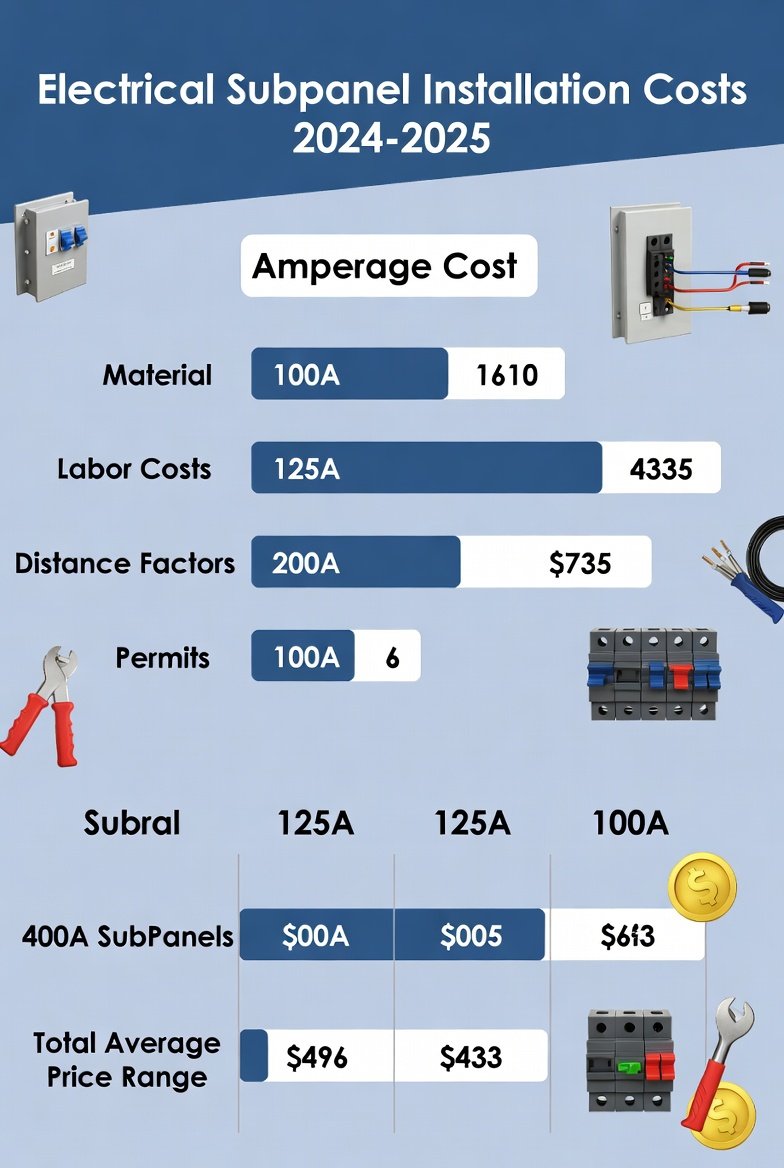
Feeder cable cost increases with amperage and distance.
Amperage | Feeder Wire Material Cost |
60 Amp | $150 – $300 |
100 Amp | $300 – $600 |
125 Amp | $500 – $900+ |
Copper prices fluctuate. Aluminum feeder cable is sometimes used for longer runs to reduce cost, but must be sized properly to meet code.
Electricians frequently increase wire gauge on longer runs to reduce voltage drop — which raises material cost.
What’s Included in a Proper Subpanel Installation
A code-compliant subpanel installation includes:
- Subpanel enclosure
- Feeder breaker in main panel
- Feeder cable
- Neutral and ground separation
- Grounding rod (for detached structures)
- Permit & inspection
Permit and inspection requirements are explained here: panel upgrade inspection
Skipping inspection is a major red flag.
Field Reality: Common Inspection Failures
From real-world installs, inspectors most often flag:
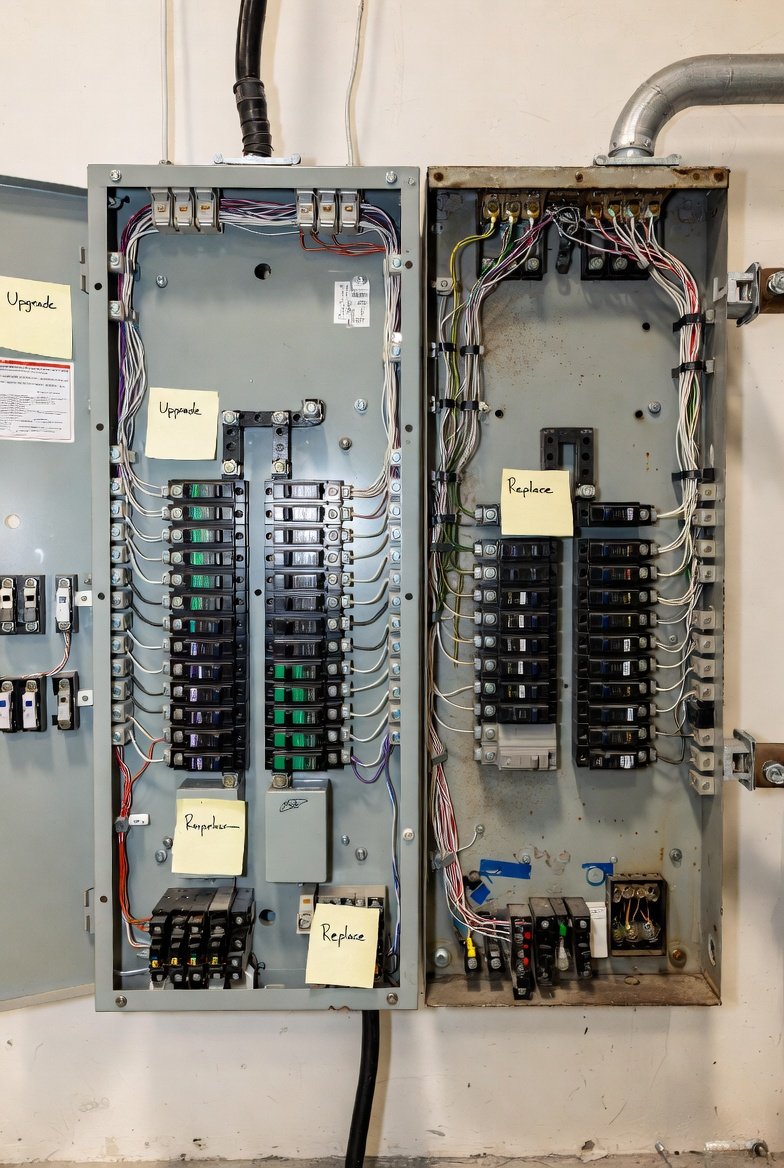
- Neutral and ground bonded incorrectly in subpanel
- Missing grounding rod in detached structures
- Undersized feeder breaker
- Improper wire gauge for distance
- Overfilled breaker spaces
Subpanels must isolate neutrals from grounds — unlike main panels. This is one of the most common DIY mistakes.
Garage Subpanel Cost
Typical attached garage installation:
$1,000 – $2,500
Cost depends on:
- Feeder distance
- EV charger plans
- Lighting load
- Compressor or tool demand
If planning EV charging, review capacity considerations here: EV-Charger
Sometimes a subpanel works. Sometimes a main panel upgrade is required first.
Detached Shed or Workshop Subpanel Cost
Detached buildings typically fall at the higher end:
$1,800 – $3,500+
Because they require:
- Underground feeder
- Conduit installation
- Trenching
- Separate grounding electrode system
Distance increases both material and labor cost.
Electrical Subpanel Quote Red Flags
Be cautious of:
- Quotes under $700 for full installation
- No permit listed
- No grounding explanation
- No feeder wire size specified
- “No inspection required” claims
A proper installation includes grounding separation and inspection documentation.
Real-World Cost Scenarios
Scenario A: 100A Subpanel in Attached Garage (25 ft run)
- Materials: $550
- Labor: $1,200
- Permit: $200
Total: ~$1,950
Scenario B: 100A Subpanel in Detached Garage (80 ft trench)
- Materials: $850
- Labor: $1,800
- Permit: $250
Total: ~$2,900+
Distance and trenching drive pricing.
When a Subpanel Is the Right Move
Install a subpanel when:
- Main panel has remaining capacity
- You need additional breaker space
- You’re finishing a basement
- You want dedicated workshop circuits
If the main panel is overloaded or aging, see replacement costs here: replacement cost
If unsure about capacity, load calculation determines viability: electrical panel upgrade
Does a Subpanel Increase Home Value?
Indirectly.
It improves:
- Circuit organization
- Expansion capability
- Electrical safety
- Workshop usability
But it does not increase total service amperage unless combined with an upgrade.
Regional & Code Variations
While NEC standards are national, local adoption varies.
Pricing differences arise from:
- Permit fees
- Utility coordination rules
- Inspection procedures
- Conduit and grounding requirements
Regional labor rates significantly impact final pricing.
Cost of Waiting
Delaying installation when circuits are overloaded may lead to:
- Repeated breaker trips
- Extension cord overuse
- Fire risk
- Inspection failure during resale
- Insurance underwriting complications
Subpanels are often preventive safety measures — not cosmetic upgrades.
Quick Decision Guide
Situation | Best Solution |
Need more breaker space | Subpanel |
Need more total amperage | Upgrade |
Old failing panel | Replacement |
Detached workshop | Subpanel (if capacity allows) |
Final Cost Summary
Most homeowners pay:
$800 to $3,500+
Final price depends on:
- Amperage
- Feeder wire size
- Distance
- Trenching
- Permit requirements
- Labor complexity
When installed correctly, a subpanel is a clean, code-compliant expansion — not a temporary workaround.
FAQ Section
How much does it cost to install a 100 amp subpanel?
A 100 amp subpanel typically costs between $1,200 and $2,800 depending on feeder distance, trenching, and permit requirements.
Is a permit required for a subpanel?
Yes. Most municipalities require permits and inspections to verify correct grounding, breaker sizing, and neutral separation.
Does a detached garage subpanel require its own grounding rod?
Yes. Detached structures generally require a grounding electrode system in addition to feeder conductors.
Can a subpanel increase my home’s electrical capacity?
No. A subpanel redistributes circuits but does not increase total service amperage.
Can I install a subpanel myself?
In most areas, licensed electricians are required due to permit and inspection regulations. Improper installation can result in code violations and safety risks.