
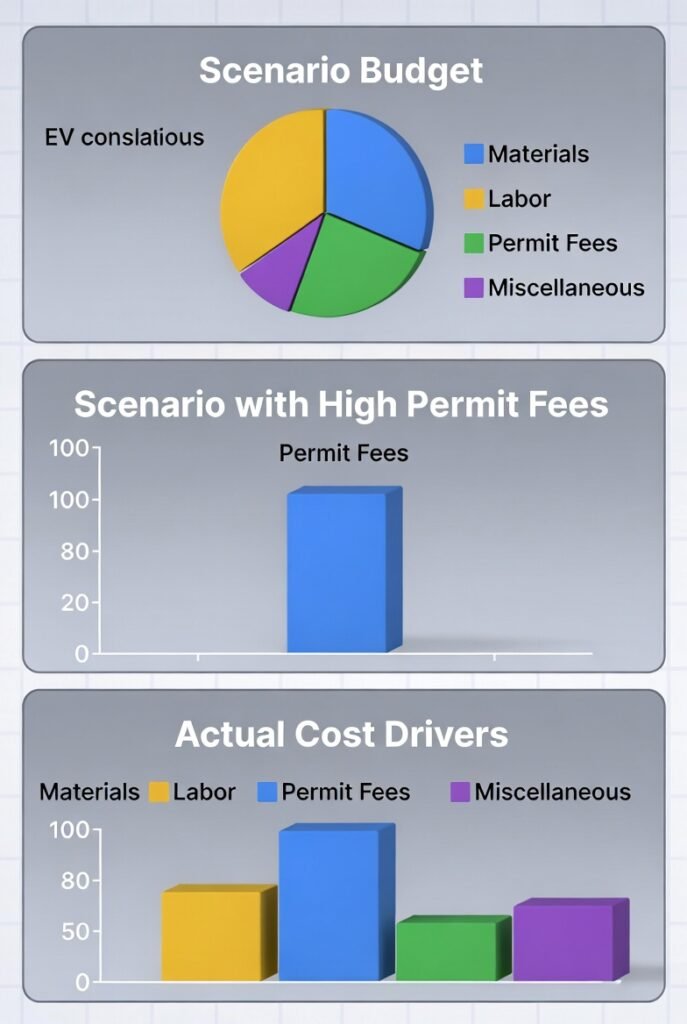
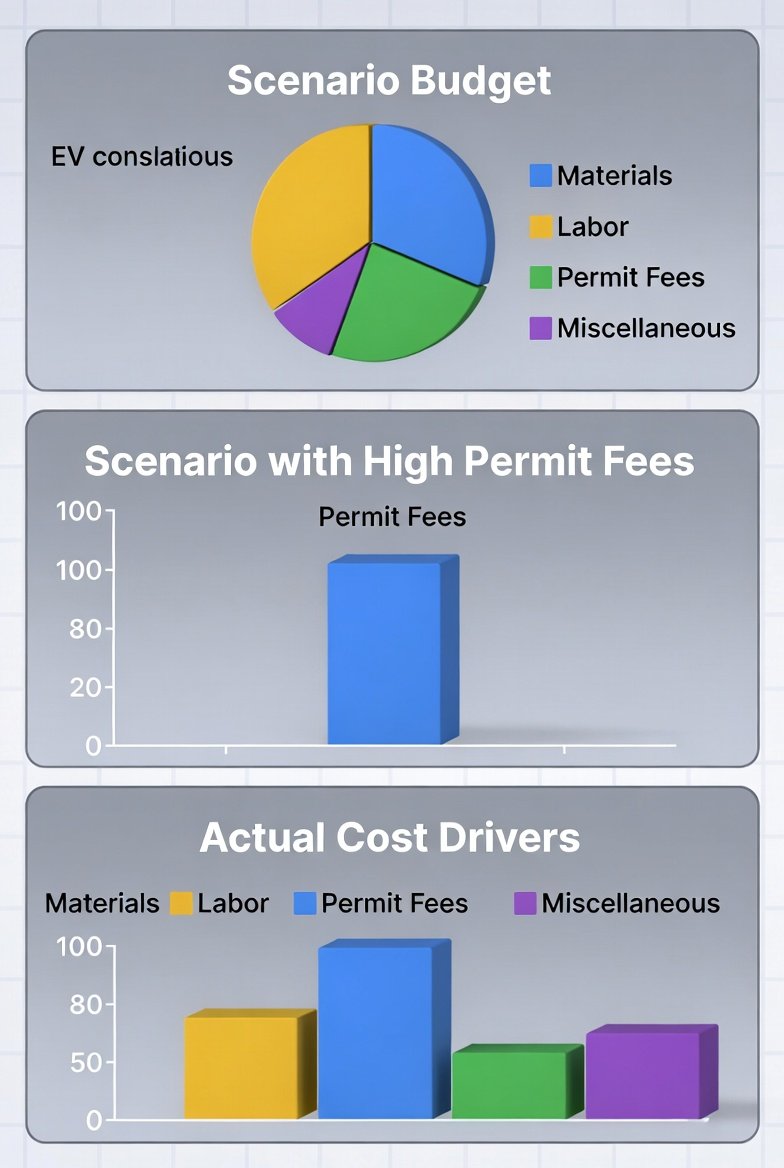
Panel Upgrade for EV Charger Cost
The fastest way to blow an EV charger budget is to price the charger first and the electrical interface last.
Inspectors and utilities don’t care what brand of charger you bought. They care whether the service can support the added load, whether the circuit is permitted, and whether the installation is protectable and traceable on paper.
That’s why two neighbors can install the same charger and end up with bills that are thousands apart.
If you want the baseline “panel vs service” context before you budget, start here:
100a vs 200a
Real-World Budget Scenarios (Start Here)
These are planning ranges—not quotes—but they match how the project actually behaves.
Your Starting Point | Likely Scope | Typical Total Budget |
200A service + modern panel + easy routing | Standard install | $800–$3,000 (energysage.com) |
100A service + panel has space, but margin is tight | Standard or load-managed | $1,800–$4,200 (often depends on load management vs upgrade) |
100A service + panel is full/obsolete | Panel replace or subpanel + install | $3,000–$6,500 |
60A/100A service + electrification stacking | Service upgrade + install | $4,500–$9,000+ (utility/routing can push it higher) |
To understand “margin” the same way inspectors do, reference:
load calculation guide
The Cost Stack (What You’re Actually Paying For)
This is the stack most SERP pages blur together.
1) Charger installation scope
EnergySage cites a typical home charger installation range of $800–$3,000 based on Qmerit installation data. (energysage.com)
That assumes the panel is already compatible.
2) Routing & access scope (the biggest swing factor)
This is where costs jump.
Routing Condition | What It Means | Typical Add-On Cost Band |
Easy | Unfinished access, short run | $0–$500 add-on |
Moderate | Longer run, partial finish | $500–$1,500 add-on |
Hard | Finished walls, complex route | $1,500–$3,500 add-on |
Detached garage / trenching | Exterior work | $3,000+ possible |
If you’re unsure what “panel compatibility” even means for EV charging, use:
ev charger panel requirement
3) Permit + inspection layer
Qmerit notes permits often range $50–$800 with an average around $310, depending on jurisdiction. (qmerit.com)
If you want the inspection flow and the common delay points:
electrical permit guide
4) Panel/service scope (only if needed)
This is where “panel upgrade” lives. It’s not one thing. It’s a decision.
For broad upgrade ranges and what drives them:
panel upgrade cost
The Three Paths That Control Your Cost
Path 1: Standard install (no panel upgrade)
When it happens: 200A service or adequate margin; panel has space.
Typical budget anchor: $800–$3,000. (energysage.com)
Path 2: “Avoid the upgrade” with load management
EnergySage notes load management systems often cost around $1,200 installed, and can be cheaper than a full service upgrade in many cases. (energysage.com)
This is a serious budget lever when:
- service is tight but not failing,
- you want Level 2 charging without rebuilding service equipment.
Path 3: Panel replacement or service upgrade
A service upgrade becomes likely when:
- service is 60A/100A and margin doesn’t pencil out,
- the panel is full/obsolete,
- you’re stacking future loads.
A 200A upgrade commonly falls in the low-thousands in typical scenarios, but complexity can push it higher. (electricmemphis.com)
If you’re stacking EV + heat pump, read this before you decide anything:
upgrade for heat pump
If battery backup is planned, cost decisions change again:
panel upgrade for home battery
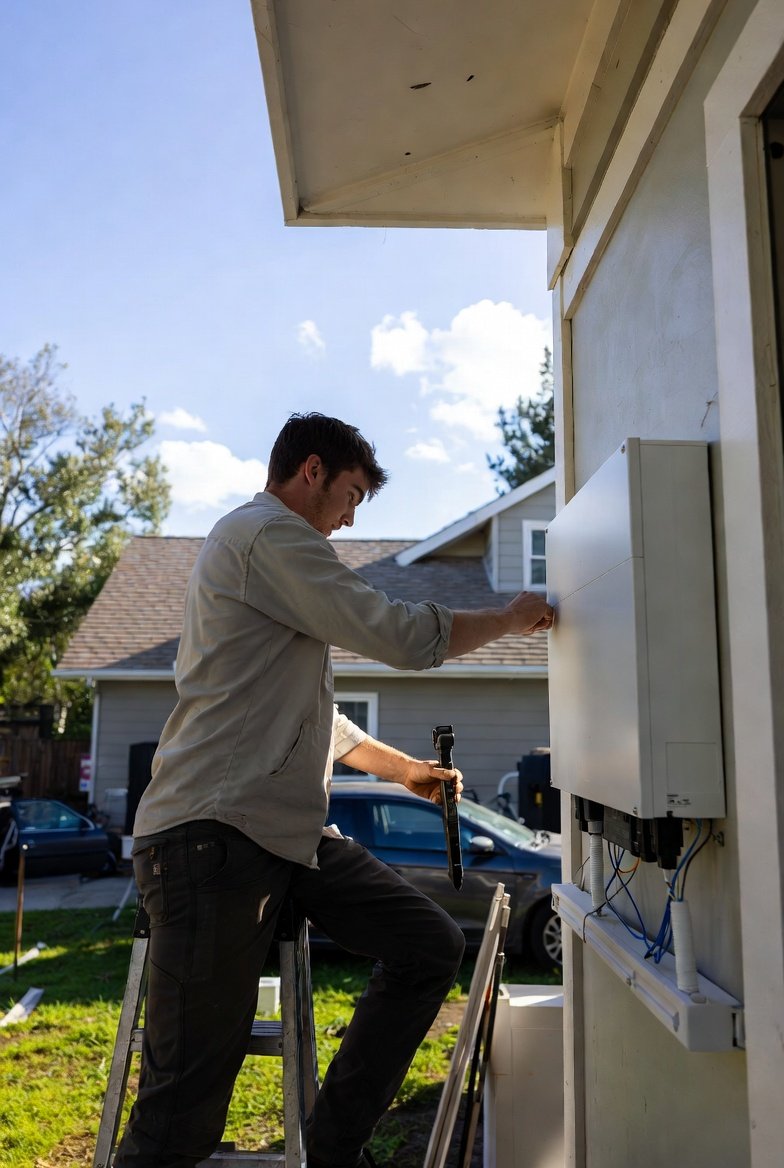
Charger Amperage Choice: The Quiet Cost Trigger
This is a cost reality that SERPs don’t explain cleanly.
Choosing a higher-output charger can:
- increase conductor and breaker requirements,
- increase routing complexity,
- push a tight service into upgrade territory.
You don’t need to memorize electrical rules.
You do need to understand: charger choice can force electrical scope.
If you’re making that decision right now, anchor it to your service size and load margin, not “fastest charging.”
Decision Grid: Cheapest Safe Path vs Lowest Long-Term Friction
Option | Typical Add-On Cost | Timeline | Rework Risk |
Standard install | Included in install | Fast | Low |
Load management | ~$1,200 typical (energysage.com) | Fast–Medium | Low–Moderate |
Panel replacement | Mid | Medium | Low if modernized |
Service upgrade | Highest | Slowest (utility/permit) | Lowest long-term |
This is the cleanest way to compare “cheap now” vs “stable later.”
Inspection Rework Costs (Most Cost Pages Ignore This)
EV charger projects fail inspection for predictable reasons:
- incorrect labeling/documentation,
- circuit protection mismatch,
- inadequate working clearances,
- service/load issues identified late.
When a correction happens, your cost stack often adds:
Rework Item | Typical Cost Effect |
Re-inspection fee | $100–$500 (varies by AHJ) |
Electrician return trip | $150–$400+ |
Correction labor/material | $200–$1,500+ |
Utility re-scheduling (service work) | Time risk (can delay weeks) |
This is why “just install it” can become the expensive path.
Tax Credit Box (Keep it short, SERP-friendly)
The IRS outlines the Alternative Fuel Vehicle Refueling Property Credit (30C) for qualifying charging equipment installed in eligible locations. (irs.gov)
DOE/AFDC notes 30C rules apply to qualifying property placed in service after Jan 1, 2023 and through June 30, 2026, with location eligibility requirements. (afdc.energy.gov)
Treat this as a potential cost reducer—not your planning foundation. Verify eligibility directly on IRS guidance. (irs.gov)
Final Verdict
The “panel upgrade for EV charger cost” question is really three questions:
- Can your service support the charger load?
- Can you route the circuit without expensive access work?
- Will load management solve it cheaper than an upgrade?
If your home has capacity and access, you may stay in the standard install range ($800–$3,000). (energysage.com)
If your service is tight, load management often prices in around $1,200 and can avoid a full upgrade. (energysage.com)
If you’re stacking EV + heat pump + battery, the stable play is often one coordinated upgrade rather than multiple permit cycles.
Frequently Asked Questions
How much does a panel upgrade for an EV charger cost?
It depends on whether you need a service upgrade, a panel replacement, or load management. Standard installs often fall in the $800–$3,000 range when the existing electrical setup is compatible. (energysage.com)
Can load management avoid a service upgrade?
Often yes. EnergySage notes load management systems typically cost around $1,200 installed and can be cheaper than a full service upgrade in many cases. (energysage.com)
How much are permits for EV charger installation?
Permitting varies by jurisdiction. Qmerit notes permits often range $50–$800, with an average around $310. (qmerit.com)
What makes EV charger installs expensive?
Routing difficulty (finished walls, detached garage), panel space constraints, service capacity limits, and inspection rework are the biggest drivers.
Is there a federal tax credit for EV charger installation?
The IRS outlines the 30C credit for qualifying EV charging equipment installed in eligible locations. Verify eligibility on IRS guidance. (irs.gov)