
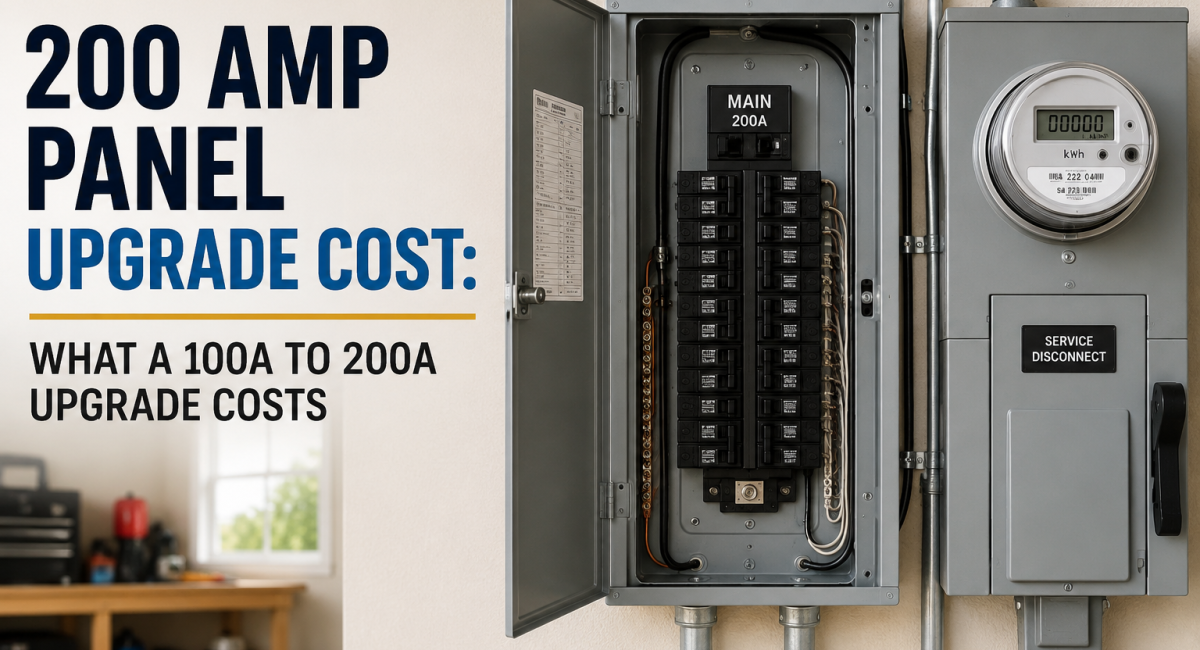
A 200 amp electrical upgrade often costs a few thousand dollars, but the number on a quote depends heavily on what is actually being upgraded. Replacing or upgrading the panel equipment is a different scope from increasing a home from 100 amp to 200 amp service, and costs can rise sharply when the meter equipment, service entrance, underground conductors, trenching, or utility infrastructure also need work.
As a broad national reference, Rewiring America estimates a typical electrical panel upgrade at about $2,000–$4,000. That is a useful budgeting starting point, not a guaranteed price for every 100-to-200 amp project. Before comparing estimates, first determine what each contractor is actually including.
200 Amp Panel Upgrade Cost at a Glance
| Project Scope | What May Change | Cost Impact |
|---|---|---|
| Panel-focused work | 200A-rated panel, main breaker, branch-circuit reconnection and related panel work where the existing service arrangement can remain | Usually the lower-cost scenario |
| 100A to 200A service upgrade | Panel plus customer-side service equipment or conductors needed to support the higher capacity | Usually costs more than panel-only work |
| Service and meter changes | Additional meter, service-entrance, grounding, bonding or related equipment work as required | Adds labor, materials and coordination |
| Utility or underground work | Trenching, underground service work or utility infrastructure changes | Can increase the total substantially |
The key point: two contractors can both quote a “200 amp upgrade” while pricing substantially different scopes of work. Compare what is included before comparing the totals.
What Does “Upgrade to 200 Amps” Actually Mean?
A 200 amp electrical panel and 200 amp incoming utility service are related, but they are not automatically the same thing. Equipment can be capable of serving a 200 amp load without the home necessarily having 200 amps of incoming utility service.
That distinction matters because a homeowner asking about the cost to upgrade from 100 amps to 200 amps is usually dealing with more than the price of a breaker box. The electrician must determine which parts of the existing installation can remain and which must change to support the planned capacity.
Depending on the existing system, the project can extend beyond the panel to service conductors, meter equipment, the service entrance, grounding and bonding work, and utility coordination. The exact scope depends on the installation, serving utility and locally adopted requirements.
How Much Does a 100 Amp to 200 Amp Upgrade Cost?
For initial budgeting, about $2,000–$4,000 is a useful broad reference for a typical panel-upgrade project. A full 100-to-200 amp service upgrade can cost more when the project extends beyond the panel.
A current PG&E example shows how much service configuration can matter. For homes in its territory, the utility estimates roughly $3,000–$8,000 for a full panel upgrade with overhead service and notes that some projects involving underground service can reach $20,000 or more when trenching is required.
Those are PG&E-specific examples, not national averages. They illustrate why a single “average 200 amp upgrade cost” can be misleading when two homes require very different work.
Why 200 Amp Upgrade Quotes Can Be So Different
The largest price differences often appear when the project scope extends beyond the panel itself.
Existing Service Equipment
If existing service components cannot support the planned capacity, additional equipment and conductors may need to be upgraded rather than simply reconnecting the new panel.
Meter and Service-Entrance Work
Changes involving the meter location, meter equipment or service entrance add work that may not be included in a basic panel-focused estimate.
Overhead vs. Underground Service
Underground service can become substantially more expensive when excavation, conduit, conductor work or utility coordination is required.
Panel or Service-Equipment Relocation
Keeping equipment in a suitable existing location is generally a different scope from relocating it. A relocation can add conductor, conduit, structural and finish work to the project.
Additional Work Found During the Upgrade
Existing grounding, bonding, service equipment or wiring conditions can expand the job when they must be corrected or modified as part of the permitted work. These items should appear clearly in the estimate rather than being buried inside a generic “200 amp upgrade” price.
For pricing across other panel sizes and electrical-upgrade scenarios, see our electrical panel upgrade cost guide.
Sources: Rewiring America provides the broad panel-upgrade cost reference. PG&E provides the overhead- and underground-service examples used to show how service configuration can affect project cost.
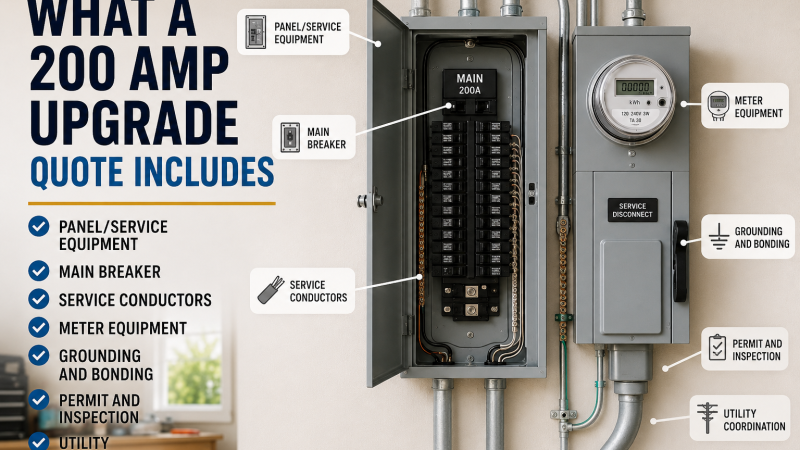
What Should a 200 Amp Upgrade Quote Include?
A 200 amp upgrade quote should make the scope clear enough that you can tell whether you are paying for panel work alone or for a broader service upgrade.
Depending on the project, the estimate may include the new panel or service equipment, main breaker, required breakers, branch-circuit reconnection, labor, testing, permit administration, inspection coordination and cleanup. A full 100-to-200 amp service upgrade may also involve service conductors, meter equipment, grounding and bonding work, and utility disconnect or reconnect coordination.
The important part is not whether every contractor uses the same line items. It is whether the quote clearly identifies what is included and what would be charged separately.
| Item to Check | Why It Matters |
|---|---|
| 200A panel or service equipment | Confirms what equipment is actually being installed or replaced |
| Main breaker and required branch breakers | Breaker replacement can change material cost and project scope |
| Service conductors | A capacity increase may require customer-side conductors sized for the new service |
| Meter equipment | Meter-socket or meter-main work can add labor, equipment and coordination |
| Grounding and bonding work | Existing components may need modification as part of the upgrade |
| Permit and inspection fees | Some estimates include them; others list them separately |
| Utility coordination | Disconnect, reconnect, meter or service work may require utility involvement |
| Repairs and finish work | Drywall, siding, excavation or restoration may fall outside the electrician’s scope |
What May Cost Extra?
Two quotes can differ substantially because one includes work that the other treats as a separate charge.
Common add-ons include trenching, underground conduit work, panel relocation, exterior repairs, drywall or paint repair, major service-entrance changes, utility charges and unrelated wiring corrections elsewhere in the home.
Compare scope against scope, not just the final price.
Does Upgrading to 200 Amps Require Rewiring the House?
No. Increasing the electrical service to 200 amps does not automatically require a whole-house rewire.
Existing branch-circuit wiring can often remain if it is suitable for the circuits it serves and does not need replacement as part of the permitted work. A panel or service upgrade can still uncover wiring or equipment conditions that require correction, but that is different from automatically rewiring the entire house because the service capacity increased.
Whole-house rewiring is a separate scope and can change the project cost dramatically. If you are trying to determine whether the work is limited to the panel or extends through the home’s wiring system, see our guide to panel upgrades vs. rewiring a house.
Permits, Inspections and Utility Coordination
A 100-to-200 amp service upgrade often involves both the local electrical authority and the serving utility. The exact process depends on the jurisdiction and utility serving the property.
Local approval may be required before the upgraded service can be energized, while the utility may need to coordinate the meter, disconnect, reconnect or service connection. These steps can affect both the final cost and the project schedule.
For a closer look at local fees, see our electrical panel upgrade permit cost guide. For the approval stage itself, see our guide to electrical panel upgrade inspections.
Who Handles the Utility?
The electrician or electrical contractor often coordinates required utility work, but this should be confirmed in the estimate rather than assumed.
Ask specifically whether the quote includes any required service application, disconnect and reconnect scheduling, meter work or utility-related fees. If those items are excluded, the apparent price difference between two contractors may be larger than the real difference in total project cost.
How Long Does a 200 Amp Upgrade Take?
The installation time and the total project timeline are not the same thing.
For a straightforward project, the physical panel or service-equipment work may be completed in a single working day, with power shut off for part of that period. The full project can take longer when permitting, utility review, scheduling and inspections occur before or after installation day.
When reviewing a contractor’s schedule, ask whether it already accounts for:
- permit approval;
- utility application or review;
- disconnect and reconnect scheduling;
- electrical inspection;
- any required utility inspection or final connection.
For the complete sequence from planning through final approval, see our electrical panel upgrade process guide.
Sources: Seattle Department of Construction and Inspections, Seattle City Light, and PG&E.
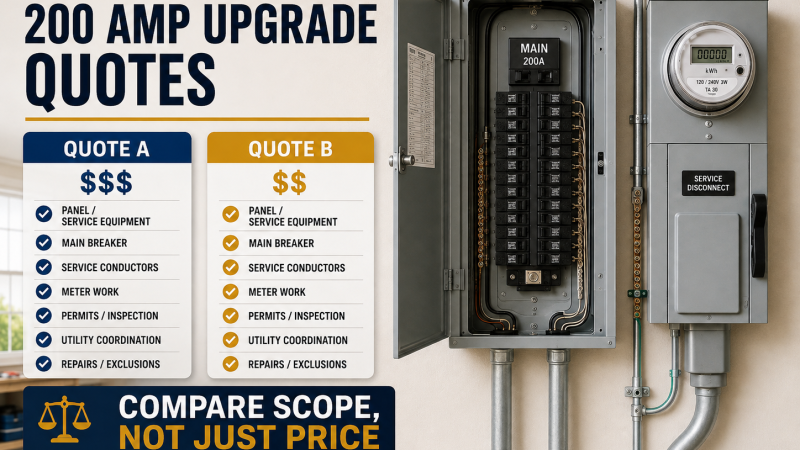
How to Compare Two 200 Amp Upgrade Quotes
When two estimates are far apart, first check whether the contractors are pricing the same scope of work.
One quote may cover primarily the panel and installation, while another includes service conductors, meter equipment, utility coordination, grounding and bonding work, permits, inspections or repairs. Comparing only the final totals can make two different projects look like competing prices for the same job.
Before choosing a contractor, compare these items line by line:
- the exact panel or service equipment being installed;
- whether the project is a panel replacement or a true service-capacity increase;
- main breaker and branch breakers included;
- service-conductor work;
- meter or meter-main changes;
- grounding and bonding work;
- permit and inspection costs;
- utility disconnect and reconnect coordination;
- trenching, conduit or underground work;
- drywall, siding or other finish repairs;
- corrective electrical work listed separately;
- how additional work discovered during the project will be priced.
A useful estimate should make the included scope clear before work begins. If an item is unclear, ask whether it is included, excluded or subject to an additional charge.
200 Amp Upgrade vs. Panel Replacement
A same-capacity panel replacement and a 100-to-200 amp service upgrade are different projects.
A panel replacement may involve replacing aging, damaged or obsolete equipment while keeping the existing service capacity. A 100-to-200 amp upgrade increases available service capacity and can require changes beyond the panel.
That additional scope is one reason a true service upgrade can cost more than replacing a panel at the same amperage.
For a detailed comparison, see our electrical panel upgrade vs. replacement guide. For same-capacity replacement pricing, see our electrical panel replacement cost guide.
Frequently Asked Questions
Does installing a 200 amp panel automatically give the home 200 amp service?
No. A panel rated for 200 amps does not by itself establish the capacity of the incoming electrical service. The service equipment, conductors and utility connection must also support the intended capacity.
Does every 100-to-200 amp upgrade require a new meter socket?
No. Whether the meter equipment must be replaced depends on the existing installation, equipment rating, utility requirements and the scope of the upgrade.
Who pays for utility-side work?
Responsibility depends on the serving utility and the work required. Some utility work may be covered under normal service rules, while other upgrades or customer-requested changes may create additional charges. Confirm responsibility before accepting the final project estimate.
Why can underground service make a 200 amp upgrade more expensive?
Underground projects can require excavation, conduit work, conductor replacement or other infrastructure changes that are not part of a straightforward panel installation. When required, those items can become major cost drivers.
Is a 200 amp upgrade always necessary for new electrical loads?
No. The need for more service capacity depends on the home’s existing electrical demand and the loads being added. A load calculation can help determine whether the current service has adequate capacity. See our electrical panel load calculation guide for more detail.
Bottom Line
A 200 amp upgrade can range from relatively straightforward panel and service work to a much larger infrastructure project. The cost depends largely on how far the required work extends beyond the panel.
Use broad price ranges for initial budgeting, but compare contractor estimates by scope. Confirm the service equipment, meter work, conductors, permits, utility coordination and excluded repairs before deciding which quote offers the better value.